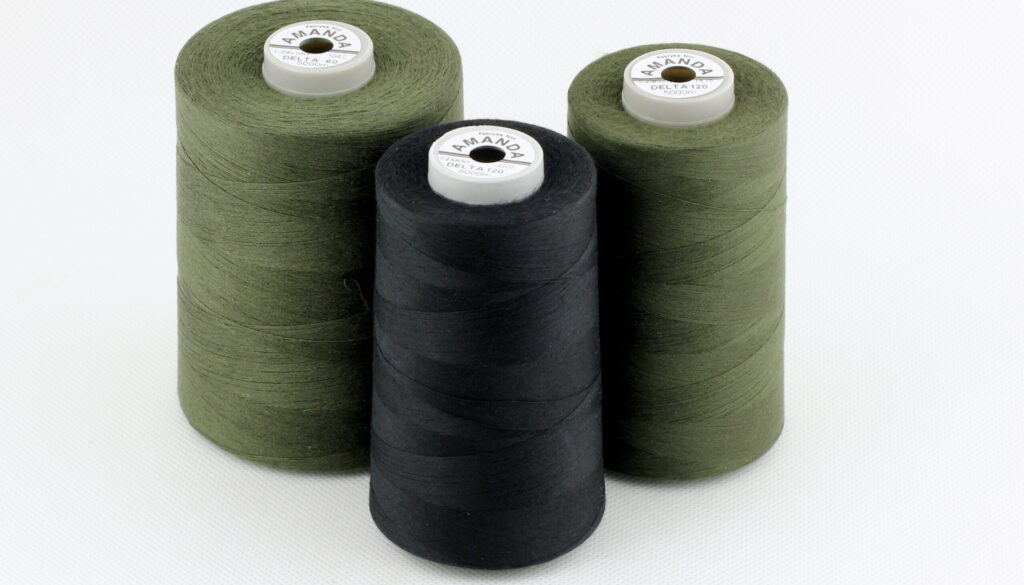
The Definitive Guide to Technical & Military Sewing Threads
Uniforms demand performance.
Uniforms demand performance. From military camouflage gear to industrial workwear, from tactical backpacks to heavy leather patches, every stitch must endure harsh environments. Choosing the right thread is as critical as the fabric itself.
At Amanda Threads, we engineer threads tailored for the toughest applications. In this guide, we cover:
- what constitutes a military sewing thread
- how manufacturers of uniforms choose threads
- specialty threads bulletproof vests, military belts
- threads suited to workwear applications
- IR-invisible & flame-retardant threads
- compliance, certifications, and selection criteria
Let’s start with the fundamental question.
Military Sewing Thread: What It Means & Why It Matters
Definition & Requirements
A military sewing thread is not just any strong thread — it’s a thread engineered to meet the demanding standards of military use. Such threads must:
- Withstand extreme environmental stresses (UV, salt spray, humidity, abrasion)
- Maintain tensile strength under load, even when wet
- Be compatible with stealth/IR requirements (for camouflage and concealment)
- Resist chemical exposure (fuel, oils, detergents)
- Offer dimensional stability (low shrinkage, low creep)
- Sometimes provide antistatic or flame retardant features
When a garment or gear is sewn with an inadequate thread, the weakest link isn’t the fabric — it’s the seam. For military uniforms, failure is unacceptable.
Key Performance Metrics
To qualify as a military sewing thread, several metrics are critical:
- Tensile strength (measured in Newtons or kilograms)
- Elongation / stretch — too much stretch can lead to puckering or seam distortion
- Abrasion resistance
- UV resistance / lightfastness
- Chemical resistance
- Thermal behavior (especially near flame, heat)
- Infrared (IR) signature — invisibility in IR spectrum, often required
- Antistatic properties — to avoid static accumulation in gear
Amanda Threads’ military threads are designed and tested under such standards.
Applications of Military Sewing Thread
Where do these threads get used?
- Uniforms & duty garments
- Load-carrying gear: backpacks, pouches, vests
- Tactical belts, webbing, MOLLE systems
- Field tents, shelters, parachutes
- Boots, gaiters, footwear reinforcement
- Leather patches, insignia, name tags
- Protective clothing overlays, ballistic systems, bullet proof vests
Because the same thread may be used in various components, consistency and compatibility are essential.
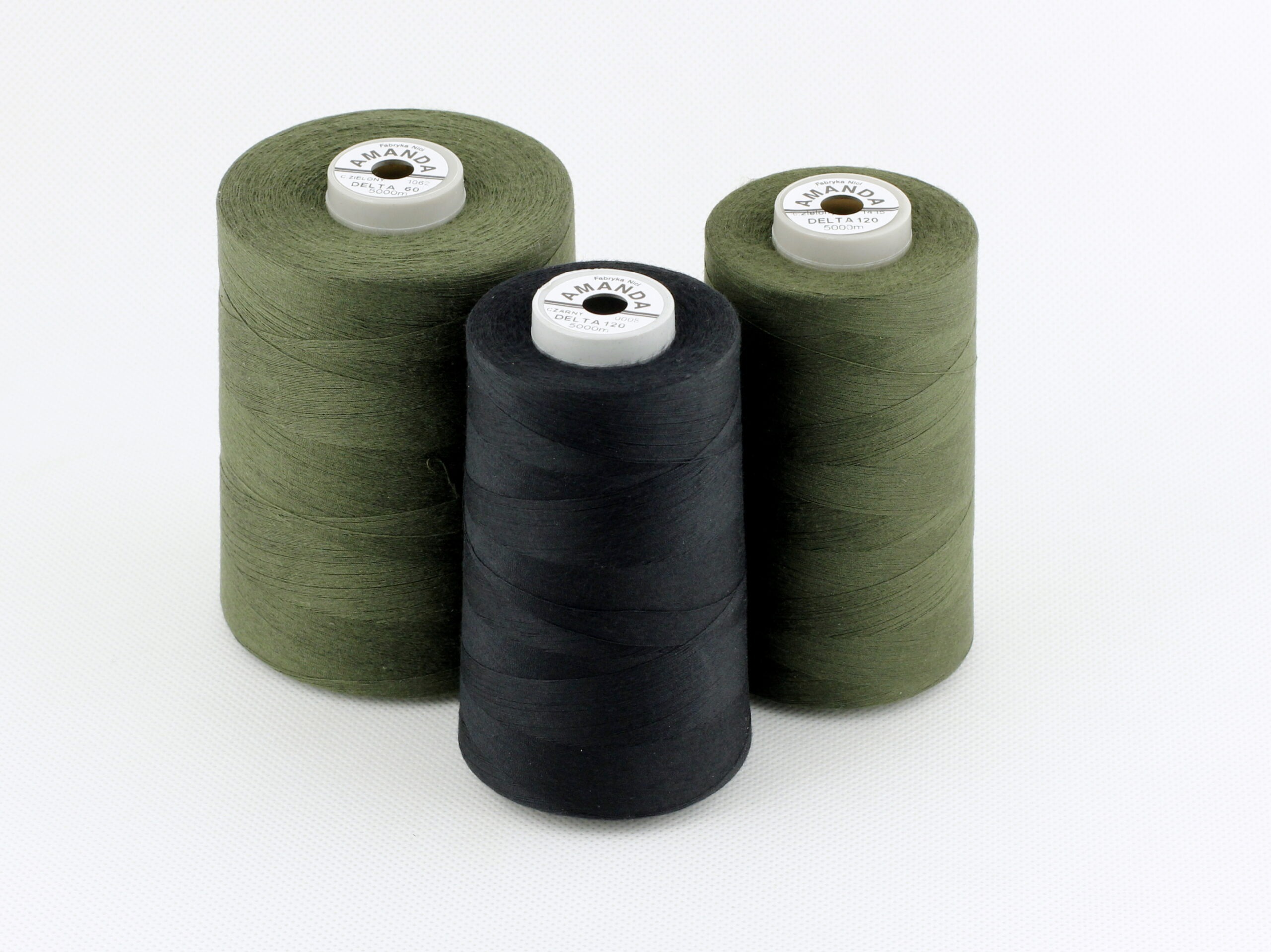
Threads for Uniforms Manufacturers: What They Need to Know
Uniform manufacturers face unique challenges, balancing cost, durability, regulatory compliance, and performance. Below are key considerations and how to align with them.
Supply Chain & Consistency
When producing uniforms in series, thread consistency is vital. Slight variation batch to batch can alter seam behavior. Manufacturers look for:
- Color matching / dye consistency
- Batch traceability & quality control
- Global availability & lead times
- Certifications & test reports
Amanda Threads ensures strict QC and documentation for all threads used in uniform production.
Fabric Compatibility & Thread Selection
Uniform materials vary — cotton poly blends, ripstop fabrics, aramid panels, softshell fabric, reinforced leather patches. A manufacturer must match thread to fabric:
- Use polyester core threads for general uniform fabrics
- Use para–aramid or meta-aramid threads for flame resistant panels
- Use nylon / polyamide where elasticity or flexibility is needed
- Use metal core antistatic threads in shielding or ESD zones
Manufacturers often need hybrid threads (e.g. core–sheath constructions) to balance strength, flexibility, and compatibility.
Seam Types & Stitching Methods
Manufacturers use multiple stitch types (lockstitch, chain stitch, bar tack, overlock). Each has special stresses:
- Lockstitch is common; the thread must seal the seam and resist backstitch pull
- Bar tacks reinforce high stress points (pockets, belt loops)
- Overlock / serge edges demand smooth threads that don’t fuzz or fray
Manufacturers must ensure the thread performs across all stitch types.
Regulatory & Compliance Demands
Various military and industrial standards may apply:
- IR-invisibility (infrared reflectance)
- Antistatic / ESD compliance
- Flame retardancy
- Colorfastness & lightfastness
- Breaking strength
- correct thickness
- Salt spray / corrosion resistance
When bidding for contracts, manufacturers often need documented test results or certificates. Threads from Amanda Threads can be accompanied by test sheets and compliance data.
Cost vs Performance Tradeoffs
Manufacturers must find balance:
- Premium threads (e.g. aramid core) cost more, but reduce failure risk
- For lower stress zones, standard threads may suffice
- Bulk orders and predictable planning help reduce costs
Amanda Threads works with manufacturers to optimize thread specs and cost structure.
Why Work with Amanda Threads for Uniforms
Key advantages:
- Specialized R&D in military / uniform threads
- Existing lines optimized for stealth, durability, antistatic needs
- Internal testing and specification adherence
- Customized batches, color matching, labeling, traceability
- Support for design & prototyping phases
When a manufacturer partners with Amanda Threads, they gain access to purpose-built threads and technical consultation.
Durable Thread for Boots and Backpacks
Boots and backpacks impose exceptional stress on seams: flex, abrasion, tensile loads, moisture, and impacts. Here’s how to choose threads for those rugged applications.
Unique Challenges in Footwear & Load Gear
- Bending & flex fatigue over hundreds of thousands of cycles
- Abrasion from ground contact, edges, rough surfaces
- Moisture, mud, salt — threads are often exposed to elements
- High tensile stress (especially on load-bearing straps)
- Exposure to UV / sunlight
Thus the thread must never become the failure point.
Key Material Choices
- Para -Aramid: High strength, good heat and flame resistance, but low moisture absorption
- Meta- aramide: Excellent heat and flame resistance, average breaking strength
- High tenacity polyester core: Good general-purpose option for many gear applications
- Polyamide / nylon: Good elasticity and shock absorption, but may degrade under UV
- Hybrid or sheathed core threads: Core fiber (aramid or steel) wrapped in a sheath (polyester, polyamide) to protect it
Seam Design & Reinforcements
- Use bar tacks, zigzag stitches, or double stitching for high-stress areas
- Use reinforcing patches or overlays
- Consider backtack or locking stitches to prevent unraveling
- Use gussets to distribute load, reducing stress on seams
Examples of Thread Lines
- Use Gabor for heavy load stitching
- Use Delta series threads for IRR
- Use Aramida N series when subject to extra heat or abrasion
- Use Arena where blending strength and flexibility is needed
Durability Testing & Standards
Manufacturers often conduct:
- thread breaking force tests
- friction tests
- thickness rating
Customers should request test reports, especially for military contracts.
Applications & Use Cases
- Boot uppers, welts, gussets, eyestays
- Backpack main seams, strap attachments, webbing
- Reinforced panels, flap stitching
- Gear loops, belt attachment points
Each application may use a different thread specification, even within a single product.
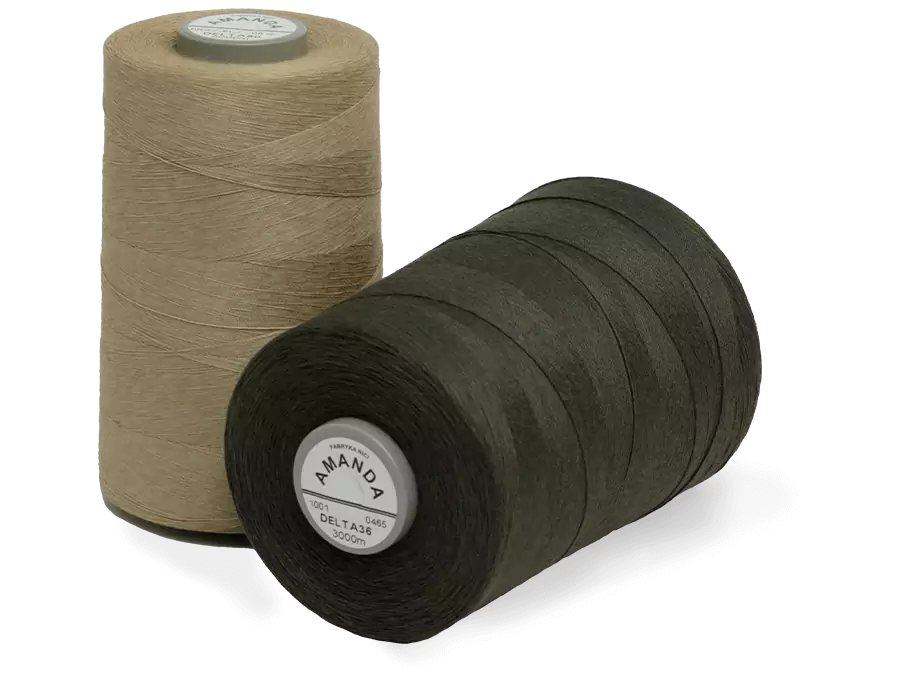
Threads for Workwear and Uniforms
Why Workwear Threads Differ from Fashion Threads
Workwear faces constant mechanical stress. Threads used in uniforms for industry, healthcare, or defense must withstand:
- Frequent washing and disinfection cycles
- Contact with rough surfaces or sharp tools
- Exposure to oils, solvents, UV, and abrasion
- Sweat, moisture, and temperature extremes
Unlike fashion garments, workwear has to last hundreds of wash cycles without seam degradation. A weak thread can cause seam failure, fabric puckering, or even tearing under load. That’s why Amanda Threads designs technical sewing threads that perform far beyond ordinary apparel specifications.
Key Properties of Threads for Workwear
Property | Purpose |
High tensile strength | Maintains seam integrity under tension and bending |
Abrasion resistance | Prevents fraying on cuffs, pockets, and stress points |
Chemical resistance | Ensures thread does not weaken when exposed to oils, detergents, or disinfectants |
Heat stability | Allows ironing and pressing without seam damage |
Colorfastness | Prevents fading under sunlight and repeated washing |
Low shrinkage | Keeps seam appearance consistent after drying |
Recommended Amanda Threads Solutions
- Delta Threads: IRR thread. polyester core thread with cotton braid ideal for general workwear, uniforms, coveralls, and jackets. High tensile strength with smooth stitch performance.
- Arena Threads: a balanced option offering elasticity and durability — great for softshell and blended fabrics.
- Thor Threads: antistatic thread
- Aramida K (para-aramide) or Aramida N (meta-aramide) – for protective garments, kevlar vests, or fire resistant uniforms
Sectors That Rely on Durable Threads
- Industrial and manufacturing uniforms
- Oil & gas and petrochemical protective wear
- Medical and laboratory clothing
- Firefighting and rescue services
- Security and defense garments
- Hospitality and food industry uniforms
Each application may require different specifications — for example, flame retardancy in firefighting apparel, antistatic properties in electronics manufacturing, or IR invisibility in defense clothing.
Seam Appearance and Aesthetic Quality
Uniforms must look professional. A high-quality thread also provides:
- Even stitch formation (for visual uniformity)
- Low lint and fuzz (reduces needle wear and machine downtime)
- Stable dye shade for consistent appearance across production runs
Amanda Threads ensures precise dyeing and winding processes to meet these expectations.
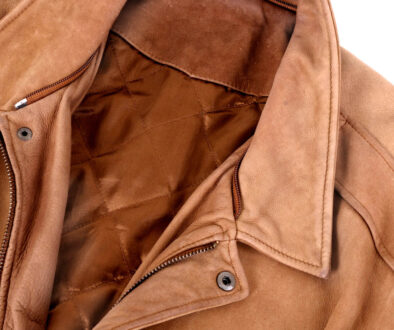
Strong Sewing Threads for Leather Goods and Uniform Patches
The Challenge of Sewing Leather and Heavy Materials
Leather, synthetic leather, and multilayer uniform patches exert enormous friction and needle heat on threads. The thread must therefore combine strength, heat resistance, and smooth surface.
Threads for these materials must resist:
- Needle heat from high-speed sewing
- Abrasion inside leather channels
- Stretching and seam slippage
- UV exposure (especially on boots, belts, outdoor patches)
Choosing Thread Size and Type
- Use thicker ticket sizes (Tex 80–135) for leather boots and equipment.
- Choose bonded polyester or polyamide for flexibility and reduced fraying.
- Use aramid core variants when superior tensile strength or heat resistance is required.
Amanda Threads Recommendations
- Gabor Threads: excellent for leather boots, tactical belts, and holsters due to extreme durability.
- Arras Threads: works well for decorative or structural seams on leather patches, especially when color uniformity is needed.
- Arena Threads: ideal for multi-layer constructions, providing flexibility and resistance to seam cracking.
Applications
- Combat boots and hiking footwear
- Leather insignia and patch embroidery
- Reinforced seams on belts, holsters, and straps
- Tactical gear combining leather and textiles
- Military accessories such as sheaths and pouches
Maintenance and Testing
- Perform tensile testing on leather samples before production.
- Verify heat resistance with continuous sewing tests.
- Conduct wash and exposure trials to ensure colorfastness and seam stability.
Amanda Threads supports manufacturers with sample testing and documentation.
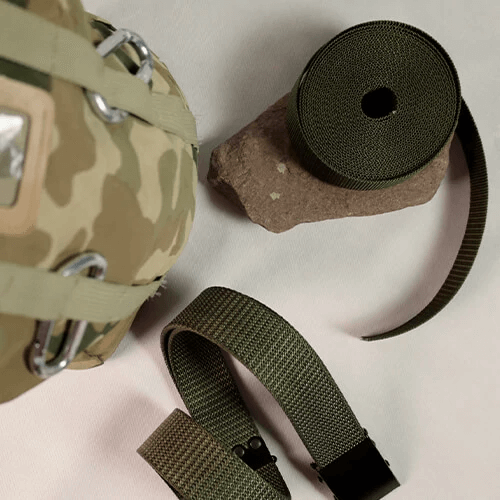
IRR-Invisible Threads for Military Gear
What “IRR” Means
Infrared (IRR) refers to the thread’s ability to remain undetectable under infrared light, especially when viewed through night-vision or thermal imaging devices. Military personnel rely on camouflage not just in visible light but also in the IR spectrum.
Ordinary threads can reflect or absorb IR differently than the surrounding fabric, creating a visible seam line in night-vision equipment. IRR threads solve this by matching the fabric’s spectral signature.
How IRR Threads Are Engineered
These threads involve:
- Special dyeing and pigmentation processes that mimic fabric reflectance in IR ranges.
- Controlled polymer composition, minimizing IR contrast.
- Surface finishes to prevent glare or reflectivity.
Amanda Threads collaborates with defense textile specialists to ensure its IRR threads meet required optical properties.
Why It Matters in Military Applications
- Enhances camouflage effectiveness.
- Reduces detection risk in night operations.
- Ensures uniform seams remain indistinguishable from fabric.
- Meets military standards (e.g., NO-84-A203) and internal defense requirements.
Thread Lines for IR Applications
- Delta Threads – available with IRR finishes for general uniform assembly.
.
Testing and Verification
IRR threads undergo:
- Spectrophotometric IRR analysis to match camouflage patterns.
- Color evaluation to match the garment color in visible light. acc. to military specification.
- tests of physical properties (breaking strength, friction, thickness, durability).
Amanda Threads ensures strict quality control so that performance remains stable throughout the garment’s life.
Antistatic Sewing Thread Metal Core
Why Antistatic Threads Are Needed
In both defense and industry, electrostatic discharge (ESD) can damage sensitive electronics or cause ignition in explosive environments. Ordinary textile fibers accumulate charge; an antistatic sewing thread with a metal filament dissipates static electricity safely.
Applications include:
- Military uniforms for electronic operations
- Protective clothing for fuel handling or ammunition depots
- ESD-safe garments for electronics manufacturing
- Grounding straps and conductive accessories
How Metal-Core Antistatic Threads Work
Amanda Threads integrates fine metallic filaments (often stainless steel or copper alloys) inside a polymer sheath. This hybrid structure ensures:
- Controlled electrical conductivity
- Mechanical strength and flexibility
- Resistance to corrosion and washing
- Seam compatibility with standard sewing machines
The result is a stable static-dissipative seam without sacrificing comfort.
Advantages of Metal-Core Antistatic Threads
- Prevents sparks or static buildup
- Maintains conductivity even after repeated washing
- Does not corrode in humid or saline environments
- Offers high tensile strength and abrasion resistance
Recommended Product Lines
- Thor Threads: for extreme durability where conductivity and mechanical strength are both required.
- Thoramid SS Threads: suitable for mixed fabric constructions combining static-safe and standard zones.
Testing and Standards
Threads are evaluated under:
- Linear resistivity (Ohms) per PN-P-04871:1991 standard
- Flame retardancy (for Thoramid ss)
- Friction for nondisruptive sewing
- Tensile and elongation testing for seam durability
Amanda Threads can provide samples for necessary testing
Selecting the Right Thread for Uniform Applications
Consider Environmental Conditions
Ask: where will the uniform be used?
- Desert or high-UV zones → UV-resistant polyester or aramid.
- Areas with risk of explosion – flame retardant threads
- Arctic or humid climates → low-shrinkage, hydrophobic thread.
- Combat or tactical use → IRR thread.
- Industrial manufacturing → flame retardant or antistatic thread.
Evaluate Stitching and Equipment
- Choose needle sizes matching thread thickness.
- Use well lubricated threads to reduce needle heat.
- Check tension settings to avoid seam puckering.
- Run small trials before mass production.
Balance Strength, Cost, and Appearance
While premium threads provide superior longevity, cost efficiency matters in large-scale production. Amanda Threads offers a balanced portfolio, enabling manufacturers to mix thread types within a garment — premium for high-stress seams, standard for low-stress zones.
Sustainability and Traceability in Thread Production
Responsible Manufacturing
Amanda Threads follows environmentally responsible production:
- Energy-efficient dyeing and winding processes
- Certified raw materials (OEKO-TEX Standard 100)
- Traceable batch records for every production lot
Why Traceability Matters for Uniform Suppliers
Government and military tenders increasingly require proof of origin and quality consistency. Amanda Threads provides documentation to verify:
- Raw material batch number
- Production date and quality test results
- Color shade and IRR/color finish records
This transparency helps uniform manufacturers meet procurement and audit requirements.
Why Choose Amanda Threads for military use
Technical Expertise
Since 1989, Amanda Threads has specialized in industrial and technical threads. Decades of R&D and cooperation with textile laboratories allow the company to deliver tailored solutions for every uniform and gear application.
Product Portfolio Overview
Product Line | Key Features | Typical Applications |
spun polyester with cotton cover, IRR finish optional | General uniforms, workwear, outdoor gear | |
Balanced strength and flexibility | Mixed fabric uniforms, tactical apparel | |
Aramid or metal-core variants, extreme durability | ESD garments | |
Nylon – strong and durable | Military gear, boots, leather goods | |
Very good flame retardancy, medium breaking strength | Jersey fabrics, flame retardant underwear production | |
Good flame retardancy, excellent durability | Kevlar fabrics, bulletproof vests | |
Good flame retardancy with antistatic properties | Garments used in explosion hazardous areas |
Quality & Certification
Amanda Threads operates under ISO-aligned quality control, providing:
- Consistent tensile and elongation parameters
- Batch-tested colorfastness and IRR
- Certificates available on request
Global Reach & Technical Support
With clients across Europe and beyond, Amanda Threads ensures reliable logistics, technical consultation, and customized production runs for special requirements.
Future of Technical Sewing Threads
The future of uniform and military sewing threads lies in smart materials — combining conductivity, thermal management, and environmental resistance. Amanda Threads continues to explore:
- Nanofiber coatings for enhanced IRR performance
- Eco-friendly polymers reducing environmental footprint
- Conductive threads compatible with smart textiles
- Integration with advanced fabrics and composites
Innovation remains at the core of Amanda Threads’ philosophy.
Conclusion
Whether for a soldier’s combat uniform, an engineer’s coverall, or a firefighter’s jacket, seams must never fail. The right thread determines how long a garment will perform under real-world stress.
Amanda Threads provides solutions across every requirement:
- Military sewing thread for defense applications
- Threads for uniforms manufacturers with certified quality
- Durable thread for boots and backpacks tested for endurance
- Threads for workwear and uniforms ensuring reliability
- Strong sewing threads for leather goods and uniform patches
- IRR threads for military gear maintaining stealth
- Antistatic sewing thread metal core preventing electrostatic hazards
Every thread produced in the Amanda factory embodies the same principles: strength, precision, and trust.
Our haberdashery products were used in many military products!